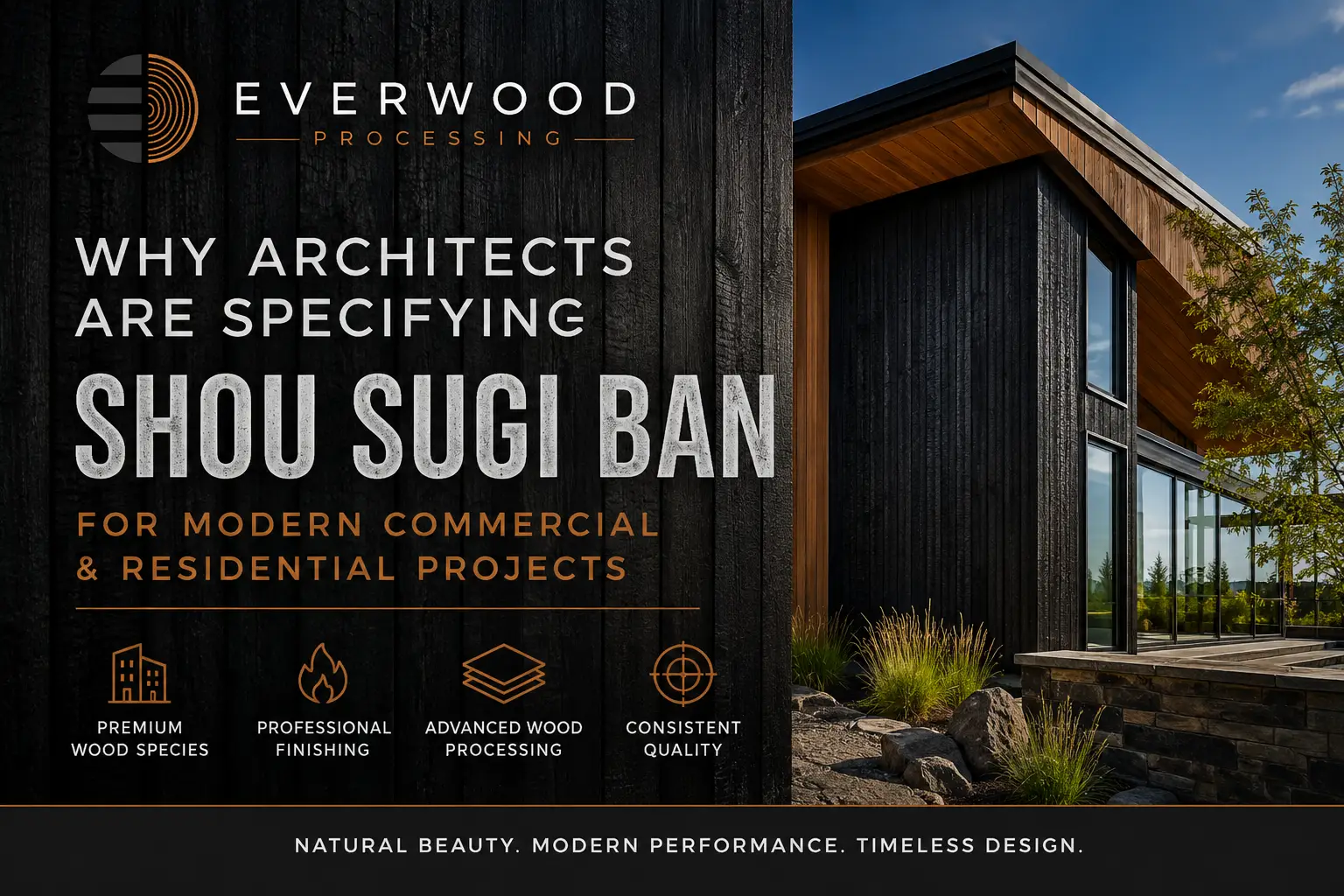
Modern architecture continues to embrace natural materials that deliver warmth, authenticity, and long-term performance. Few finishes have captured the attention of architects and designers quite like Shou Sugi Ban. Once considered a niche specialty, professionally charred wood has become a defining element of luxury residences, boutique hospitality projects, corporate campuses, restaurants, and commercial developments throughout North America.
What makes Shou Sugi Ban so appealing isn’t simply its dramatic appearance. Architects are increasingly specifying charred wood because it combines timeless craftsmanship with modern manufacturing, offering a finish that complements today’s clean architectural lines while celebrating the natural beauty of wood.
At Everwood Processing, we help architects, builders, lumber dealers, and homeowners transform premium wood species into distinctive architectural materials through professional Shou Sugi Ban processing. Our Midwest production facility combines precision manufacturing with advanced wood processing services, allowing customers to source multiple specialty processes from a single trusted partner.
Modern Architecture Demands More Than Beautiful Materials
Today’s architectural projects are expected to perform on several levels. Materials must be visually striking, durable, sustainable, and practical to install while supporting the overall design intent.
Wood has always been valued for its warmth and character, but modern architects are looking beyond traditional stained siding. They want materials that create texture, depth, and contrast while complementing steel, concrete, glass, natural stone, and large-format windows.
Shou Sugi Ban accomplishes exactly that.
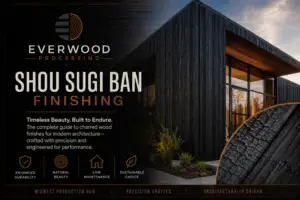
The deep charcoal tones, enhanced grain patterns, and tactile textures produced during the charring process create a sophisticated appearance that cannot be replicated with paint or manufactured cladding products. Every board carries its own unique character while maintaining the consistency required for premium architectural applications.
This balance between natural beauty and modern design has made Shou Sugi Ban one of the fastest-growing specialty finishes specified for contemporary architecture.
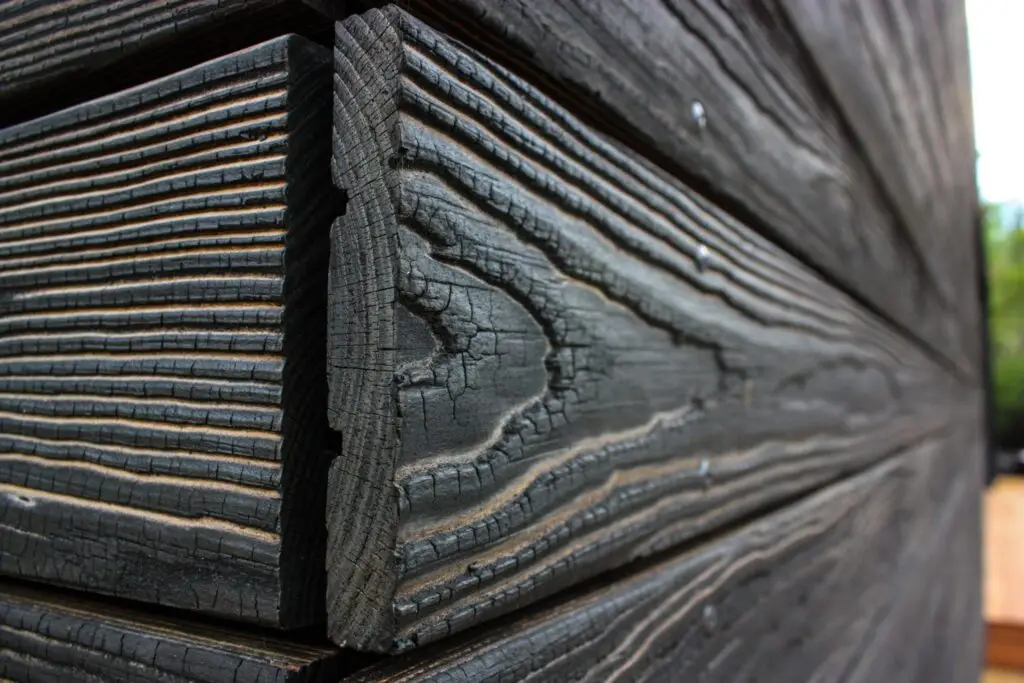
Shou Sugi Ban Is More Than a Finish
Although often described simply as “burned wood,” professionally produced Shou Sugi Ban is a carefully controlled manufacturing process.
Traditionally known in Japan as Yakisugi, the technique involves charring the surface of wood before brushing, cleaning, and, when appropriate, applying penetrating protective finishes.
Modern architectural projects rarely rely on field-applied torch techniques. Instead, architects and builders increasingly specify factory-controlled processing that delivers:
- Consistent burn depth
- Uniform appearance
- Repeatable color
- Controlled brushing
- Reliable production quality
- Commercial-scale manufacturing
This level of consistency is especially important on projects requiring hundreds or thousands of square feet of finished material.
Professional processing ensures that every board contributes to the overall architectural vision.
Premium Wood Species Create Better Architectural Results
One of the most overlooked aspects of Shou Sugi Ban is species selection.
Different wood species respond differently to the charring process, producing unique textures, grain patterns, and visual character. Selecting the right material is just as important as selecting the finish itself.
At Everwood Processing, we work with several premium architectural wood species, allowing designers to choose materials that best fit their project’s aesthetic and performance goals.
Kebony®
Kebony has become one of the premier modified wood products for exterior architectural applications.
Its exceptional dimensional stability and long service life make it an outstanding candidate for Shou Sugi Ban processing on premium projects.
Architects frequently specify Kebony for:
- Exterior cladding
- Rainscreen systems
- Luxury residential exteriors
- Architectural soffits
- Outdoor living spaces
The rich grain structure combines beautifully with controlled charring, creating dramatic yet refined architectural surfaces.
Accoya®
Accoya is widely recognized for its exceptional stability and durability.
Because the wood undergoes an acetylation process that significantly reduces swelling and shrinking, it performs exceptionally well in demanding environments where consistent appearance is essential.
Accoya is often selected for:
- High-end residential projects
- Commercial buildings
- Coastal environments
- Window and door systems
- Premium cladding
When combined with Shou Sugi Ban finishing, architects gain both visual impact and outstanding dimensional performance.
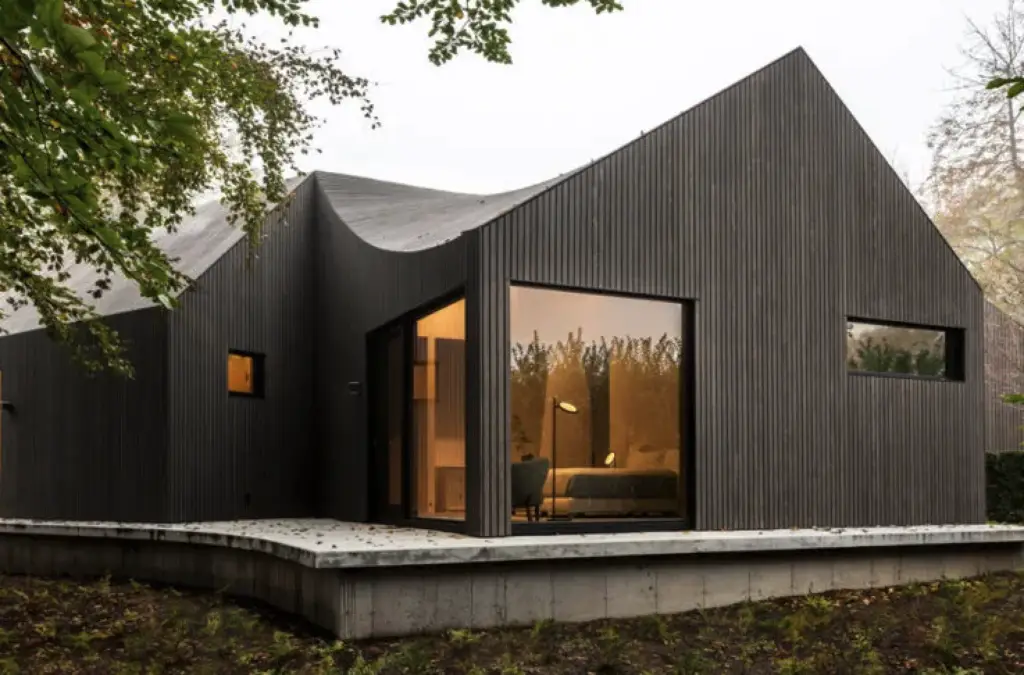
Shou Sugi Ban Home with Accoya
Thermory
Thermally modified wood has become increasingly popular among architects seeking natural beauty with improved stability.
Thermory products develop rich color and texture even before the charring process begins.
Shou Sugi Ban processing further enhances these characteristics, producing sophisticated finishes suitable for:
- Modern residences
- Commercial façades
- Ceiling systems
- Soffits
- Interior architectural features
Arbor Wood
Arbor Wood’s thermally modified hardwoods continue to gain recognition within the architectural community.
Their refined grain patterns and contemporary appearance make them excellent candidates for premium exterior applications where designers seek distinctive natural materials.
Dasso Bamboo
For projects emphasizing sustainability and high-density materials, Dasso bamboo offers another attractive option.
Commercial projects often specify bamboo because of its stability, hardness, and modern appearance.
Shou Sugi Ban processing introduces additional texture and visual depth while preserving the clean architectural lines bamboo is known for.
Cedar
Cedar remains one of the most traditional and visually striking species used in Shou Sugi Ban.
Its grain characteristics respond beautifully to controlled charring, producing rich textures that have made cedar synonymous with charred wood architecture for generations.
From custom homes to hospitality projects, cedar continues to be a favorite among architects seeking authentic natural beauty.
Commercial Applications Continue to Expand
Shou Sugi Ban is no longer limited to luxury residential construction.
Commercial architects increasingly specify charred wood for projects that require memorable architecture while maintaining natural warmth.
Common commercial applications include:
- Office buildings
- Boutique hotels
- Restaurants
- Retail centers
- Mixed-use developments
- Educational facilities
- Municipal buildings
- Healthcare environments
In each of these settings, charred wood helps soften contemporary architecture while creating distinctive visual identity.
Residential Design Has Embraced Charred Wood
Luxury residential architecture has become one of the largest markets for Shou Sugi Ban.
Architects appreciate its ability to complement modern design elements including:
- Black-framed windows
- Standing seam metal roofing
- Natural stone
- Exposed steel
- Concrete
- Large expanses of glass
Homeowners appreciate that no two boards look exactly alike.
The resulting home feels custom rather than manufactured.
Shou Sugi Ban Extends Beyond Exterior Cladding
Although exterior siding remains its best-known application, architects increasingly use charred wood throughout entire projects.
Popular applications include:
Soffits
Dark soffits create dramatic shadow lines while emphasizing roof geometry.
Interior Feature Walls
Charred wood introduces warmth into commercial offices, restaurants, hotels, wine rooms, and luxury residences.
Ceilings
Wood ceilings have become a defining characteristic of contemporary architecture.
Shou Sugi Ban provides texture without overwhelming the space.
Decorative Beams
Charred architectural beams create focal points that balance natural materials with modern construction.
Outdoor Living
Covered patios, privacy screens, pergolas, and outdoor kitchens all benefit from the distinctive appearance of professionally processed charred wood.
Why Architects Work with Everwood Processing
Choosing the right processing partner is just as important as selecting the right wood species.
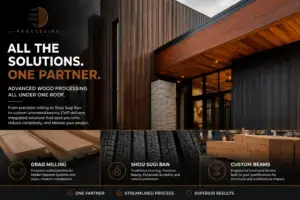
Rather than offering a single specialty service, Everwood Processing provides multiple advanced wood processing capabilities under one roof.
Architects and builders can combine Shou Sugi Ban with:
- Shou Sugi Ban Processing
- GRAD Milling
- Wire Brushing & Factory Finishing
- Custom Laminated Beams
This integrated manufacturing approach reduces coordination between vendors while improving consistency across the project.
Whether materials are customer supplied or sourced through Everwood Processing, our team works closely with builders, architects, dealers, and designers to ensure each project receives the attention it deserves.
Designing for Long-Term Performance
Successful Shou Sugi Ban projects begin long before production starts.
Architects should consider:
- Wood species
- Orientation
- Exposure conditions
- Desired burn level
- Finish system
- Fastening methods
- Moisture management
- Long-term maintenance expectations
Early collaboration between the architect, contractor, lumber supplier, and processing partner leads to better project outcomes and fewer surprises during construction.
Frequently Asked Questions
Which wood species produce the best Shou Sugi Ban finish?
Species including Kebony, Accoya, Thermory, Arbor Wood, cedar, Dasso bamboo, and selected hardwoods each offer unique textures and performance characteristics. The best choice depends on the project’s design intent and environmental conditions.
Can modified wood be charred?
Yes. Many modified wood products perform exceptionally well during the Shou Sugi Ban process and are frequently specified for premium architectural projects.
Is Shou Sugi Ban suitable for commercial buildings?
Absolutely. It is commonly used on office buildings, hospitality projects, retail developments, educational facilities, and mixed-use construction.
Can charred wood be used for soffits and ceilings?
Yes. Some of the most dramatic architectural applications involve soffits, ceilings, and other overhead features that create warmth and visual depth.
Can Everwood Processing work with customer-supplied lumber?
Yes. Everwood Processing can process customer-supplied materials or assist in sourcing premium architectural wood species appropriate for the project.
Can Shou Sugi Ban be combined with GRAD Milling?
Yes. Depending on the project requirements, multiple processing services can be combined to produce highly customized architectural wood products.
Should Shou Sugi Ban receive a factory finish?
Many projects benefit from factory-applied finishing systems that enhance appearance and help maintain long-term consistency. The ideal finish depends on the species, exposure, and design objectives.
What types of projects benefit most from Shou Sugi Ban?
Luxury residences, boutique hospitality, commercial offices, mixed-use developments, restaurants, educational facilities, civic buildings, and custom outdoor living spaces all benefit from professionally processed charred wood.
Partner with Everwood Processing
Architectural wood should do more than complete a project—it should elevate it.
Everwood Processing combines premium wood species, precision manufacturing, and advanced specialty processing to help architects, builders, lumber dealers, and homeowners create exceptional spaces with confidence. From Shou Sugi Ban processing to GRAD Milling, Wire Brushing & Factory Finishing, and Custom Laminated Beams, our integrated capabilities simplify procurement while delivering the consistency today’s architectural projects demand.
Whether you’re designing a signature commercial building, a luxury custom residence, or expanding your premium wood product offerings, Everwood Processing is ready to help transform your vision into a finished product worthy of the architecture it supports.