Approximate reading time: 10 minutes
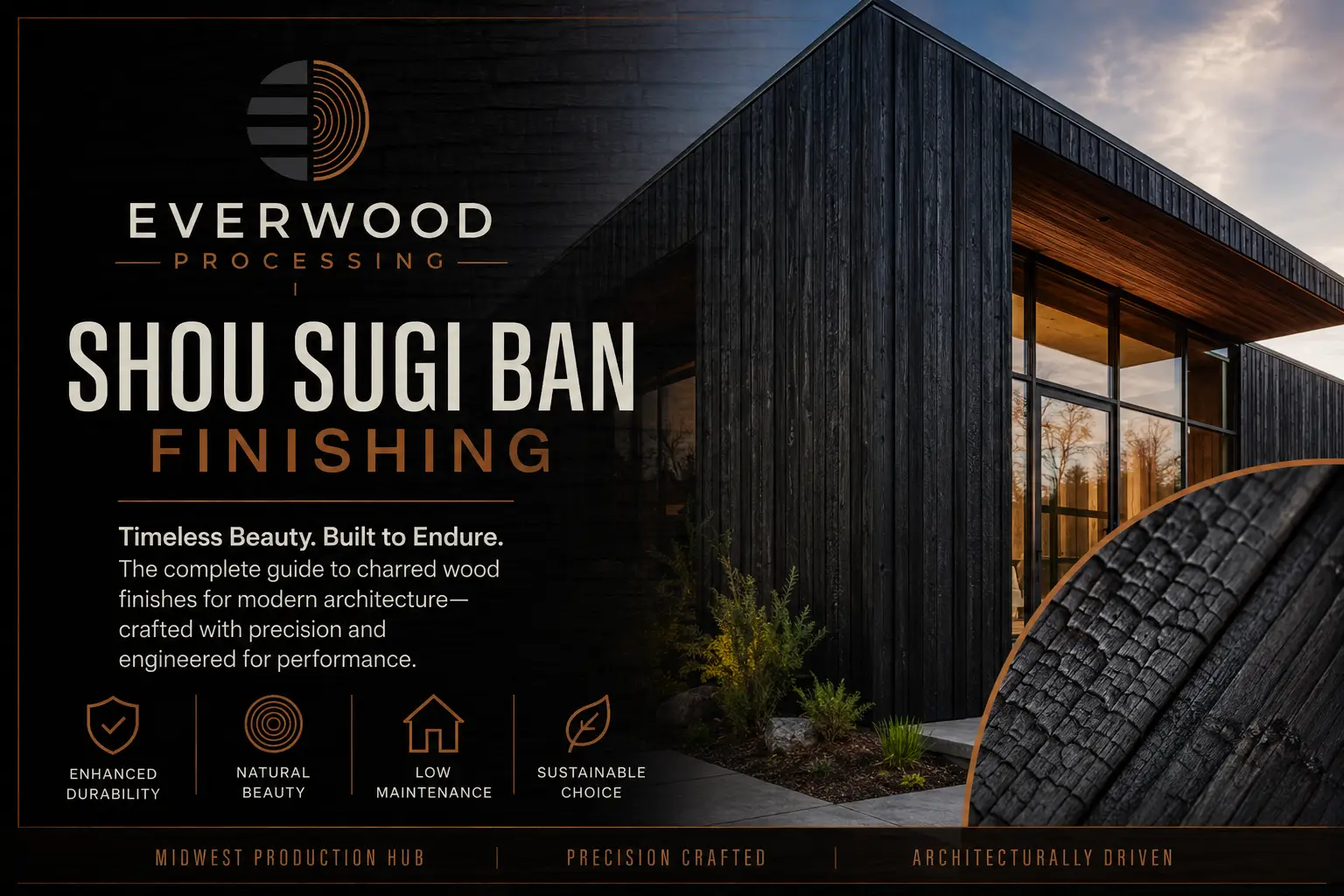
Architects and builders are increasingly specifying Shou Sugi Ban finishes because they combine striking aesthetics with long-term durability. From luxury residential projects to commercial buildings, charred wood has become one of today’s most recognizable architectural materials.
But not all Shou Sugi Ban finishes are created equal.
The quality of the burn, brushing process, finishing system, species selection, and manufacturing consistency all determine how the finished product performs for decades—not just how it looks on installation day.
At Everwood Processing, we produce precision-processed architectural wood products for builders, architects, developers, and distributors. Whether we’re processing customer-supplied lumber or sourcing premium materials, our focus is delivering consistent, production-quality Shou Sugi Ban finishes that are ready for installation.
What Is Shou Sugi Ban?
Known traditionally in Japan as Yakisugi, Shou Sugi Ban is the centuries-old technique of carefully charring the surface of wood to improve weather resistance while creating a dramatic architectural appearance.
The traditional process involves:
- Controlled charring
- Cooling
- Cleaning
- Brushing
- Applying a penetrating protective finish (when specified)
Historically, Japanese builders used the technique on cedar siding because it naturally improved resistance to weathering while producing a distinctive black appearance. Today, architects have expanded its use into contemporary commercial and residential architecture worldwide.
Why Shou Sugi Ban Has Become So Popular
Modern architecture favors natural materials with authentic texture.
Unlike painted products, charred wood develops depth through the wood itself—not by hiding it beneath coatings.
Designers appreciate:
- Rich matte black finishes
- Visible wood grain
- Natural variation
- Reduced visual weathering
- Timeless appearance
- Modern minimalist aesthetics
- Compatibility with glass, steel, concrete, and stone
The result is a façade that feels natural, sophisticated, and distinctive.
The Science Behind Charred Wood
Properly controlled charring changes the outer surface of the wood.
The carbonized layer helps reduce moisture absorption while making the surface less attractive to insects and fungal decay. Many premium systems also receive penetrating oils that stabilize the finish while allowing the wood to breathe.
It’s important to understand that professional Shou Sugi Ban is far more than “burning wood.”
The process requires careful control of:
- Burn depth
- Surface temperature
- Species characteristics
- Brushing pressure
- Finish selection
- Final appearance
Small inconsistencies during production can dramatically change the final product.
Choosing the Right Wood Species
Different species produce dramatically different results.
Everwood Processing commonly works with premium architectural species including:
- Lunawood®
- Kebony®
- Accoya®
- Thermally modified woods
- Cedar
- Select hardwoods
- Other project-approved species
Each species offers different:
- Grain definition
- Color variation
- Stability
- Texture
- Long-term weathering characteristics
Selecting the right material should always be based on the project’s performance requirements and design goals.
Levels of Shou Sugi Ban Finishing
Professional architectural projects typically specify one of several finish styles.
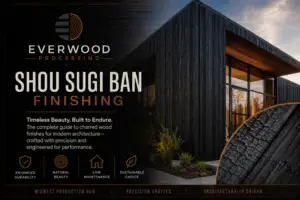
Heavy Traditional Char
Often called the “alligator” finish, this preserves a thick carbon layer with dramatic texture.
Best for:
- Statement façades
- Luxury homes
- Feature walls
Brushed Char
After charring, the loose carbon is brushed away to reveal the wood grain beneath.
Benefits include:
- Reduced surface rub-off
- More visible grain
- Contemporary appearance
- Easier maintenance
This has become one of the most requested architectural finishes today.
Light Char with Finish
A lighter burn combined with premium penetrating oils creates a softer appearance while maintaining many visual benefits of Yakisugi.
Ideal for:
- Interior walls
- Ceilings
- Decorative applications
- Modern commercial spaces
Why Factory Processing Matters
One of the biggest differences between professional architectural projects and DIY torch applications is consistency.
Factory-controlled processing provides:
- Uniform burn depth
- Consistent coloration
- Controlled brushing
- Repeatable finish quality
- Production-scale capacity
- Better quality control
Large commercial projects require hundreds—or thousands—of square feet to match.
That level of consistency simply isn’t practical with field-applied torch finishing.
The Everwood Processing Advantage
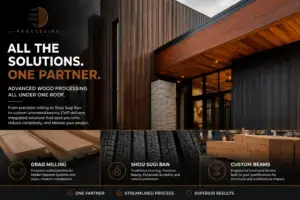
Rather than offering only charred boards, Everwood Processing provides complete production support.
Our capabilities include:
- Precision Shou Sugi Ban processing
- Wire brushing
- Factory finishing
- Custom fabrication
- GRAD® precision milling
- Laminated beam production
This allows architects and contractors to source multiple specialty wood processing services from a single Midwest manufacturing partner.
Instead of coordinating multiple vendors, projects can move through one streamlined production workflow.
Popular Architectural Applications
Shou Sugi Ban continues expanding into new markets because of its versatility.
Common applications include:
Exterior Cladding
One of the most popular uses, creating dramatic rainscreen systems with exceptional visual impact.
Soffits
Dark soffits create striking shadow lines while complementing modern architecture.
Interior Feature Walls
Restaurants, offices, hotels, and luxury residences increasingly use charred wood to add warmth and texture.
Ceiling Systems
Charred ceilings create visual depth while maintaining a natural material palette.
Decorative Beams
Brushed Shou Sugi Ban beams provide architectural character without overwhelming a space.
Commercial Projects
Retail, hospitality, education, and corporate campuses increasingly specify charred wood for premium architectural design.
Should Shou Sugi Ban Be Finished With Oil?
Many premium architectural systems receive penetrating oil finishes after brushing.
Benefits include:
- Enhanced color depth
- Reduced surface dusting
- Improved water shedding
- Richer appearance
- Easier cleaning
- More consistent weathering
Unlike film-forming coatings, penetrating oils work with the wood instead of creating a surface layer that may peel over time.
The ideal finish depends on:
- Species
- Exposure
- Desired appearance
- Maintenance expectations
Does Shou Sugi Ban Require Maintenance?
One of the biggest misconceptions is that charred wood is completely maintenance-free.
The reality is more nuanced.
Professionally manufactured Shou Sugi Ban is considered low maintenance, not maintenance-free.
The structural performance of properly charred wood generally does not depend on regular refinishing. However, owners may choose to refresh penetrating oils over time to maintain color and appearance, particularly on sun-exposed elevations.
Maintenance schedules vary based on:
- Climate
- Orientation
- UV exposure
- Finish system
- Desired appearance
Some clients embrace natural weathering, while others periodically refresh the finish to preserve a deeper charcoal tone.
Why Architects Choose Everwood Processing
Architects need more than attractive materials.
They need reliable manufacturing partners.
Everwood Processing supports projects with:
- Midwest production
- Precision manufacturing
- Consistent quality
- Commercial-scale production
- Builder-focused support
- Customer-supplied or sourced materials
- Multiple specialty processing services under one roof
Whether you’re specifying a custom residence, mixed-use development, or commercial façade, our team works with you from material selection through finished production.
Frequently Asked Questions
Is Shou Sugi Ban the same as Yakisugi?
Technically, Yakisugi is the traditional Japanese term. “Shou Sugi Ban” became the more common name throughout North America and is widely recognized within the architecture and construction industries.
Can Shou Sugi Ban be used indoors?
Yes. It is frequently specified for feature walls, ceilings, beams, restaurants, hotels, and luxury residential interiors.
Does charred wood rub off?
Traditional heavy-char finishes may release some carbon if left unsealed. Brushed and professionally finished systems greatly reduce surface transfer.
Which wood species works best?
Premium species such as Kebony®, Accoya®, cedar, and other architect-approved materials each provide different aesthetics and performance characteristics. The best choice depends on the project requirements.
Is Shou Sugi Ban environmentally friendly?
Many architects appreciate that the process can reduce reliance on conventional paints and chemical surface treatments while highlighting natural wood. Sustainability depends on the species, sourcing, finish system, and overall project design.
Can Everwood Processing char customer-supplied wood?
Yes. Everwood Processing can process customer-supplied materials or help source appropriate wood species for your project.
Can Shou Sugi Ban be combined with other processing services?
Absolutely. Many projects combine charred finishes with wire brushing, factory finishing, GRAD® precision milling, or custom fabrication to create fully engineered architectural wood systems.
Ready to Specify Shou Sugi Ban?
Whether you’re designing a luxury residence, commercial façade, hospitality project, or custom architectural installation, professional manufacturing makes all the difference. Contact us now for a sample!
Everwood Processing delivers precision-crafted Shou Sugi Ban finishes with consistent production quality, builder-focused support, and the flexibility to process customer-supplied or sourced materials. Combined with our GRAD® milling, wire brushing, factory finishing, and custom fabrication capabilities, we help simplify complex architectural wood projects from concept through installation.