There are a lot of ways to install wood. Some have been around forever, and some make you wonder why we were still doing it the old way in the first place.
The GRAD system falls into that second category.
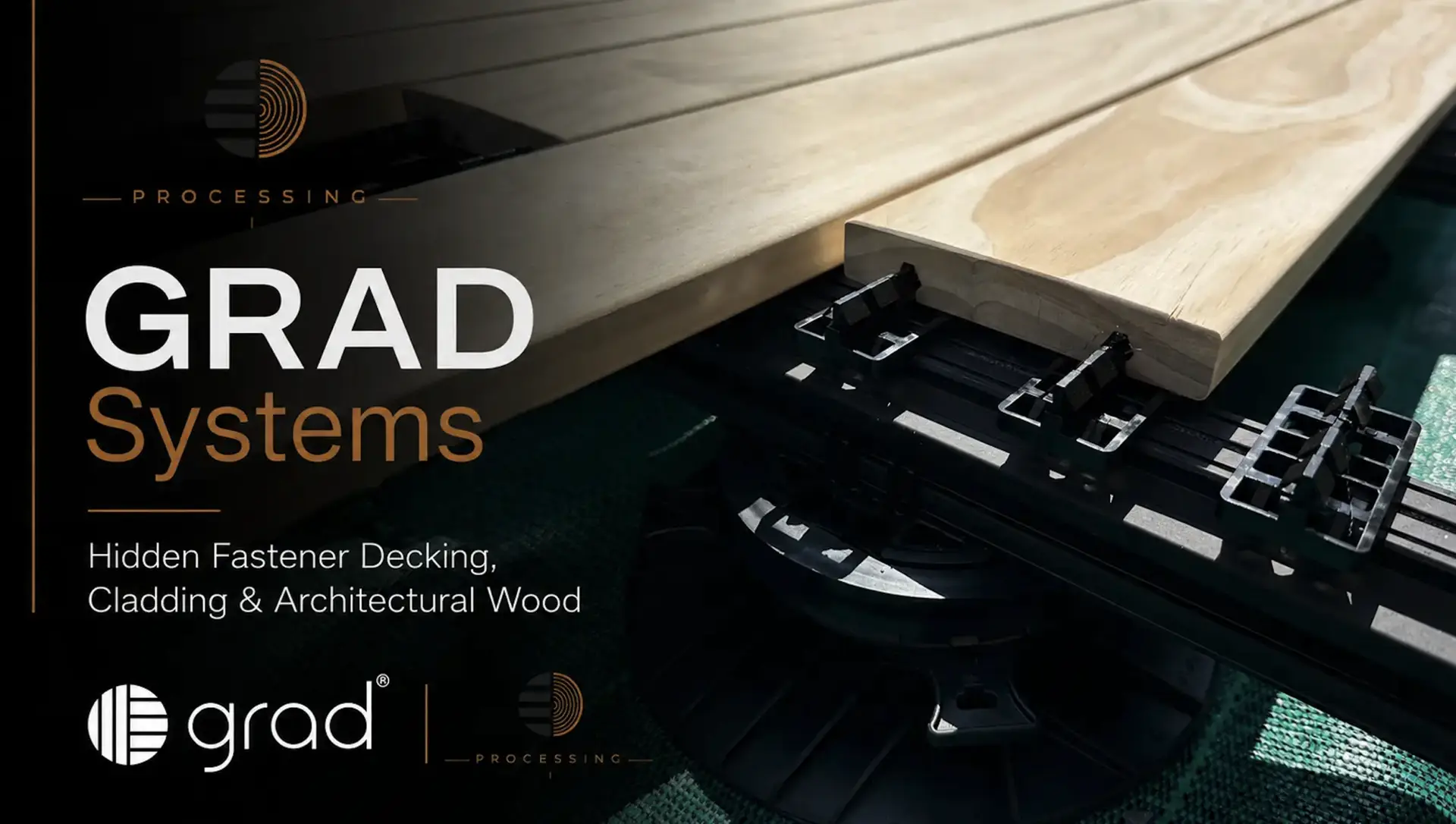
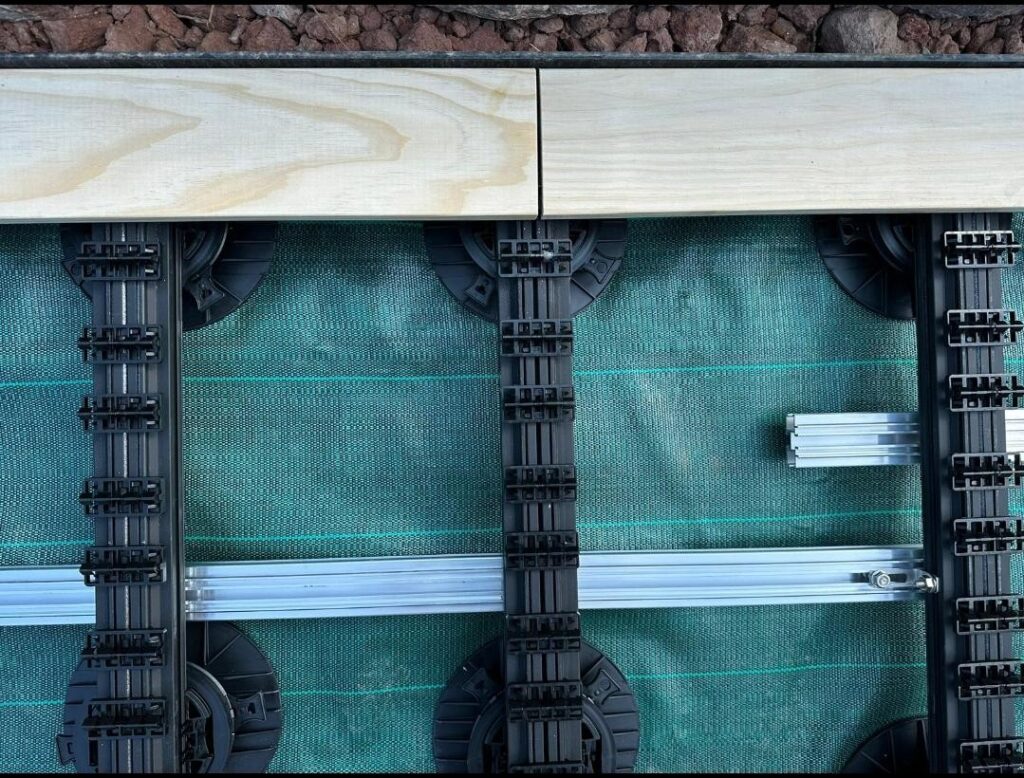
Instead of driving screws through the face of a beautiful piece of decking or cladding, GRAD uses aluminum rails and concealed clips underneath the boards. The finished surface stays clean, spacing stays consistent, and installation becomes a much more repeatable process.
At Everwood Processing, we provide precision GRAD System for decking, cladding, siding, soffits, ceilings, walls and other architectural wood applications.
So, what exactly is GRAD, and why are architects and builders paying more attention to it?
What Is the GRAD System?
GRAD is a hidden fastener system for wood decking and architectural cladding.
The basic idea is pretty straightforward. Aluminum rails are installed over the supporting structure with clips positioned along the rail. The underside of each wood board is precision milled with a profile designed to engage those clips.
The board is then pressed into place.
No screws through the face. No plugs covering screw heads. No rows of fasteners interrupting an otherwise great-looking piece of wood.
It sounds simple because, once everything is properly prepared, it is.
The important part is the milling.
The groove on the underside of every board needs to be machined accurately so it properly engages the GRAD clips. That’s where GRAD milling comes into the picture.
At Everwood Processing, we machine boards specifically for the GRAD rail and clip system so they arrive at the project ready for installation.
Hidden Fasteners Make a Big Difference
The most obvious benefit of the GRAD hidden fastener system is appearance.
If you’re installing premium wood like Kebony, Accoya, Thermory or a quality hardwood, the last thing most architects want to see is a grid of screw heads across the finished surface.
GRAD moves the attachment underneath the board.
That gives you clean, uninterrupted wood surfaces and lets the material itself be the star of the show.
This is particularly noticeable on contemporary architecture where long sightlines, consistent spacing and simple details matter.
Sometimes less really is more.
GRAD Helps Keep Board Spacing Consistent
Anyone who has spent time installing decking knows how quickly small inconsistencies can add up.
One board is a little tight. The next is a little wide. By the time you reach the other side of the deck, you’re trying to make up the difference.
GRAD takes a lot of that guesswork out of the installation.
Because the clips are positioned along the rail system, they establish the location of each board and help create consistent spacing and alignment across the installation.
That is valuable on a residential deck.
On a large commercial deck, rooftop terrace, façade or architectural ceiling, it can be even more important.
The larger the surface, the easier it is to see when something isn’t quite right.
Faster Installation Without Sacrificing the Finished Look
Labor is a major part of just about every construction project today.
Anything that can simplify installation without lowering the quality of the finished product deserves a look.
With traditional fastening methods, installers may need to position a board, measure spacing, pre-drill, install screws and repeat that process again and again.
With a properly designed GRAD decking system, the rails establish the fastening locations and the milled boards attach directly to the clips.
It creates a much more systematic installation process.
That doesn’t mean you throw the plans out the window and start clicking boards together. Layout, rail spacing, substrate preparation and proper milling all still matter.
But once the groundwork is done correctly, installation can move.
And on a big project, time is money. There’s your cliché for the day.
One of the Biggest Advantages: Removable Boards
This feature doesn’t always get the attention it deserves.
Depending on the GRAD rail configuration being used, individual boards can be removed without tearing apart an entire installation.
Think about a rooftop deck with utilities underneath it.
Or a commercial deck where one damaged board eventually needs replacement.
Or an architectural application where access behind the finished surface may be needed years later.
Traditional installation methods can turn a relatively simple repair into a much bigger project.
A system designed with future access in mind can make life considerably easier.
Architects understandably spend most of their time thinking about how a project will look when it is completed. Good building systems also consider what happens five, ten or fifteen years down the road.
GRAD Isn’t Just for Decking
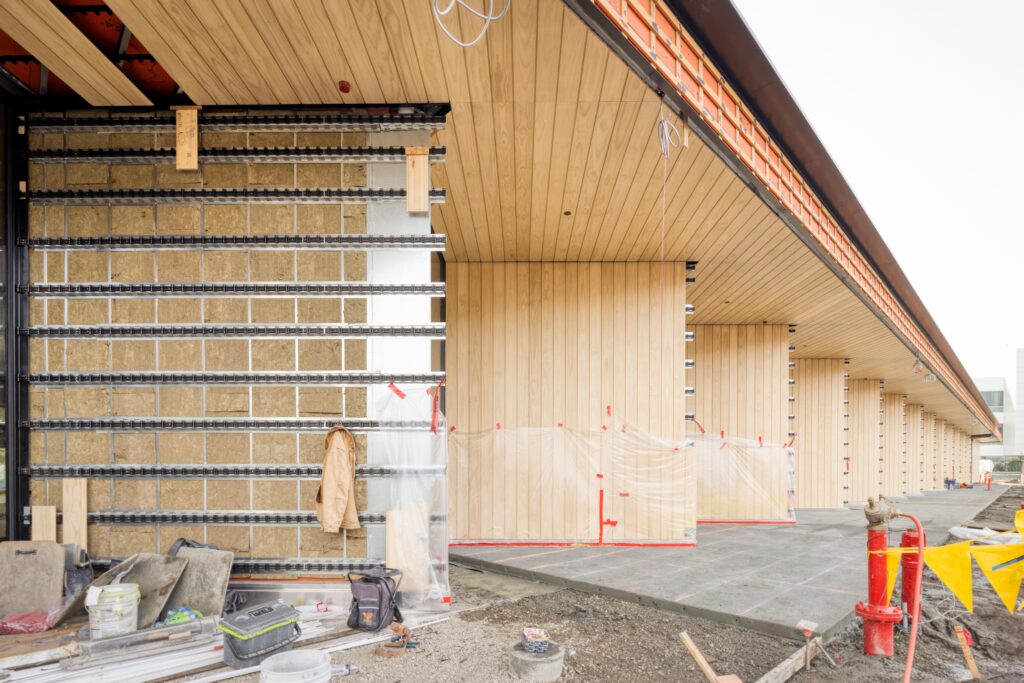
When people first see GRAD, they often think of decks.
That’s certainly a major application, but it’s far from the whole story.
GRAD can be incorporated into a range of architectural wood applications, including:
- Residential and commercial decking
- Rooftop decks and terraces
- Wood cladding
- Rainscreen siding
- Soffits
- Ceilings
- Interior wood walls
- Architectural feature walls
For decking and patio projects, the hidden fastening creates a smooth deck surface without visible face screws.
For cladding, GRAD can help create clean horizontal or vertical layouts while supporting the air space required for many rainscreen assemblies.
For ceilings and soffits, concealed fasteners are especially attractive because you’re not staring up at rows of screw heads.
Same basic technology. A lot of different possibilities.
Premium Wood and GRAD Make a Good Combination
The fastening system is only half of the equation.
You still need the right wood.
Everwood Processing works with a range of premium and modified wood products that can be evaluated for GRAD applications, including:
- Kebony
- Accoya
- Thermory
- Arbor Wood
- Dasso Bamboo
- Cedar
- Premium hardwoods
- Other project-specific materials
You can learn more about the wood materials we process and talk with our team about the best combination for a particular project.
Modified woods are especially interesting because they combine the natural appearance architects want with improved dimensional stability and exterior performance.
Pair that with a hidden fastening system and you end up with a pretty impressive finished product.
Why Precision GRAD Milling Matters
That means every part has to work together.
The rail needs to be installed correctly. The clip configuration needs to match the project. And the groove milled into the back of the wood needs to be accurate.
A poorly machined groove defeats the purpose.
At Everwood Processing, our job is to take the specified wood product and machine it to the profile required for the GRAD system. Consistency from board to board is critical.
For builders, that means receiving material that is prepared for the fastening system rather than trying to figure out specialty milling in the field.
For architects, it means the installation method can be considered as part of the design instead of becoming an afterthought once construction starts.
Is GRAD Right for Every Project?
Probably not.
No building product is.
But if the project involves premium wood, clean architectural lines, concealed fastening, consistent spacing or future board access, GRAD is worth considering early in the design process.
That’s particularly true for commercial projects, custom homes, multifamily developments, hospitality projects and high-end outdoor spaces where both appearance and long-term performance matter.
The key is getting the system, wood species, board profile and application figured out before material starts arriving on site.
Measure twice, cut once still applies.
Talk to Everwood Processing About Your GRAD Project
Everwood Processing is an approved GRAD milling and manufacturing partner providing precision GRAD milling from our Midwest production facility with project support available nationwide.
Whether you’re working on a deck, façade, rainscreen, soffit, ceiling or something a little outside the box, we can help review the material, application and milling requirements.
If you’re considering a GRAD system for an upcoming project, contact Everwood Processing or request a sample.
Sometimes the best way to understand a building system is simply to get it in your hands.