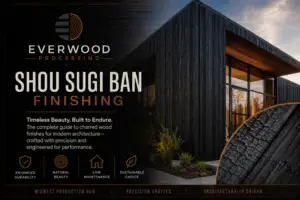
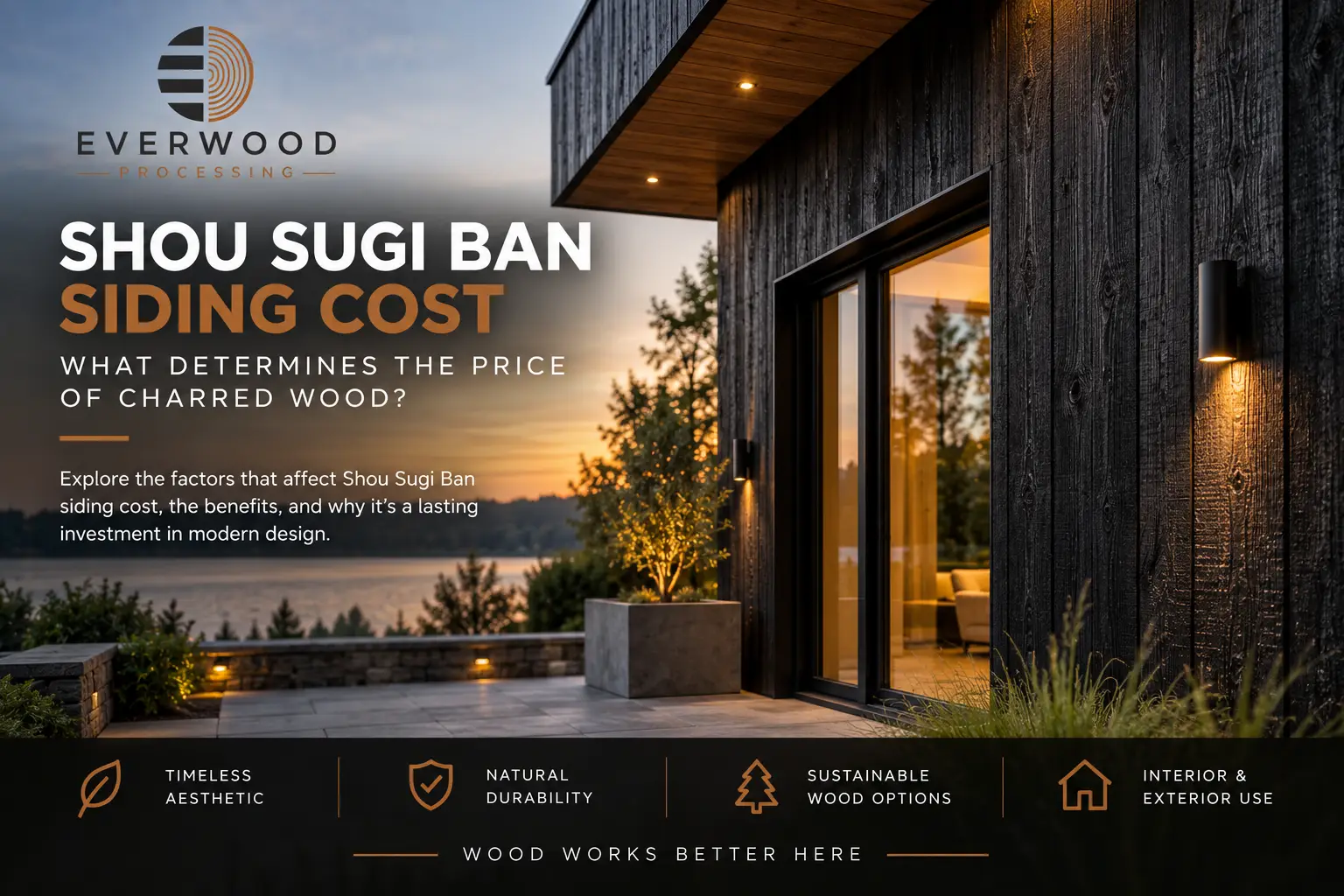
Shou Sugi Ban siding can range from a refined brushed surface with subtle charcoal character to a deeply charred architectural finish that becomes the defining feature of a building. That range is exactly why there is no single meaningful price per square foot that applies to every project. Species, board dimensions, processing, finish, profile, quantity and installation details can all move the number.
For architects, builders, lumber dealers and homeowners comparing charred wood siding, the better question is: what is included in the price? Everwood Processing provides professional Shou Sugi Ban processing along with custom milling, brushing and factory finishing, allowing project teams to develop a finish around the actual application instead of buying a generic “burned board.”
How Much Does Shou Sugi Ban Siding Cost?
Consumer cost guides currently show wide installed-price ranges, which is useful mainly as evidence that project scope matters. Recent national estimates place installed Shou Sugi Ban siding broadly in the low-to-upper tens of dollars per square foot, depending on wood species, home size, labor and whether the material arrives pre-charred. Those figures should be treated as budgeting references, not quotations for architectural material.
Commercial façades, custom profiles, premium modified woods and controlled factory finishes can differ substantially from a simple residential siding replacement. Freight, waste factors, substrate preparation, rainscreen components, corners, trim and access can also affect installed cost.
1. Wood Species Is One of the Biggest Cost Variables
The substrate is the starting point. Cedar is closely associated with traditional Yakisugi and remains popular for its grain and workability. Modern architectural projects may also evaluate Kebony®, Accoya®, Thermory®, Arbor Wood, Dasso® Bamboo and selected hardwoods. Each material has a different raw cost, machining behavior, durability profile and response to charring.
A less expensive board is not automatically the lower-cost project. Dimensional stability, expected service life, waste, finishing requirements and maintenance can matter more than the initial material price. For large commercial or high-end residential work, architects should evaluate the installed assembly and long-term expectations rather than comparing board cost alone.
2. Char Depth and Brushing Change Both Appearance and Processing
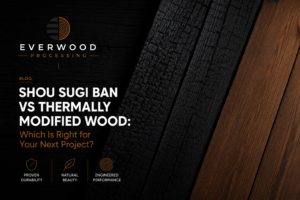
Shou Sugi Ban is not one finish. A deep, heavily carbonized surface looks and behaves differently from a brushed finish that exposes more grain. Controlled charring takes production time, and brushing adds another processing step. The desired texture should therefore be established with physical samples before a final project price is locked.
Sample approval also prevents a common problem: specifying “black charred wood” without defining how much texture, sheen, grain exposure or color variation is acceptable. Natural wood will vary, but a controlled production standard gives the architect and owner a much clearer target.
3. Factory Finishing Adds Cost but Can Remove Jobsite Labor
Some projects leave charred wood relatively natural; others use penetrating oils or project-specific protective finishes. EWP’s factory finishing and wire brushing can add processing cost while reducing sanding, coating, staging and weather exposure at the jobsite. For dealers and contractors, that shift from field labor to controlled production can improve predictability.
4. Board Profile, Milling and Hidden Fastening Affect the Package
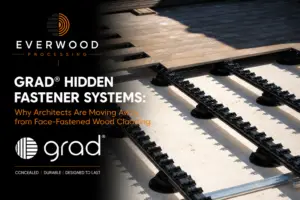
Standard siding profiles are generally easier to price than custom architectural details. Tongue-and-groove profiles, rainscreen dimensions, custom reveals, corners and hidden-fastener preparation add machining and coordination. If the project uses a concealed attachment system, groove geometry and board dimensions must be compatible before production begins.
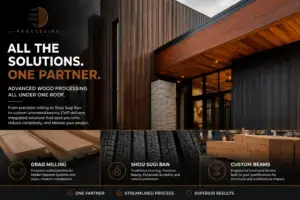
Everwood Processing can combine charred finishes with GRAD-compatible architectural wood processing where the material and application are approved. Combining processes under one roof can simplify coordination and reduce the risk of sending finished material between multiple specialty vendors.
5. Quantity, Yield and Waste Matter
Larger production runs can be more efficient, but total project quantity is not the only factor. Short lengths, special sorting, selective grain requirements, custom widths and high visual standards can reduce material yield. Architects and dealers should communicate usable dimensions and appearance expectations early so the production quote reflects the real project rather than an idealized square-foot number.
6. Installation Conditions Can Change the Installed Cost Dramatically
A simple one-story wall is not priced like a multistory commercial façade. Scaffolding, lifts, building height, corners, window openings, rainscreen furring, flashing and substrate preparation all affect labor. This is why a processing quote from EWP and an installed siding quote from the contractor should be viewed as different parts of the budget.
7. Rainscreen Design and Moisture Management Are Worth Paying Attention To
Exterior cladding must manage water, not simply look good. Building Science Corporation guidance on drained and ventilated cladding explains how the cavity behind rainscreen cladding supports drainage and drying. A properly detailed wall assembly can matter more to long-term performance than shaving a small amount from the initial material price.
EWP supports rainscreen-ready cladding and siding with precision profiles, factory preparation and compatible premium wood materials. The processing package should be coordinated with the architect’s water-control, flashing and attachment details.
Should You Buy Prefinished Shou Sugi Ban or Char It on Site?
For small decorative projects, field charring may be workable. For architectural siding, factory processing usually offers a more repeatable path. Controlled burn depth, brushing and finishing are easier to standardize in production than across scaffolding on an active construction site. It also reduces the amount of open-flame and finishing work that must be coordinated in the field.
Recent consumer cost reporting similarly notes that pre-charred material can reduce specialized field labor. The exact economics vary, but the broader principle is sound: compare the total installed process, not only the price of raw lumber.
How to Get a More Accurate Shou Sugi Ban Price
Provide the processor with species, board dimensions, profile, total square footage, length requirements, desired char level, brushing, finish, application and delivery location. Architectural drawings or elevations are even better. If appearance is important—and with Shou Sugi Ban it usually is—approve a physical sample before production.
For technical background on wood moisture, finishing and exterior performance, the USDA Forest Products Laboratory Wood Handbook is a useful third-party reference for architects, builders and informed homeowners.
Frequently Asked Questions
What is the average cost of Shou Sugi Ban siding?
Published consumer estimates vary widely because species, processing, labor and project size differ. Use online square-foot figures only for preliminary budgeting and obtain a project-specific material and installation quote.
Is cedar the cheapest wood for Shou Sugi Ban?
Not necessarily. Cedar is traditional and widely used, but local availability, grade, dimensions and processing requirements affect cost. Other approved woods may provide better value for a particular project.
Does deeper charring cost more?
It can. Burn depth, brushing intensity, handling and finish requirements all affect production time and should be defined through samples.
Is factory-charred siding better than burning boards on site?
For larger architectural projects, factory processing generally offers better repeatability, quality control and production efficiency.
Can EWP char customer-supplied wood?
EWP can evaluate customer-supplied and sourced materials for Shou Sugi Ban processing based on species, dimensions, condition and project requirements.
Need a project-specific number? Contact Everwood Processing with your material, quantity, profile and finish requirements to develop samples and a processing quote.