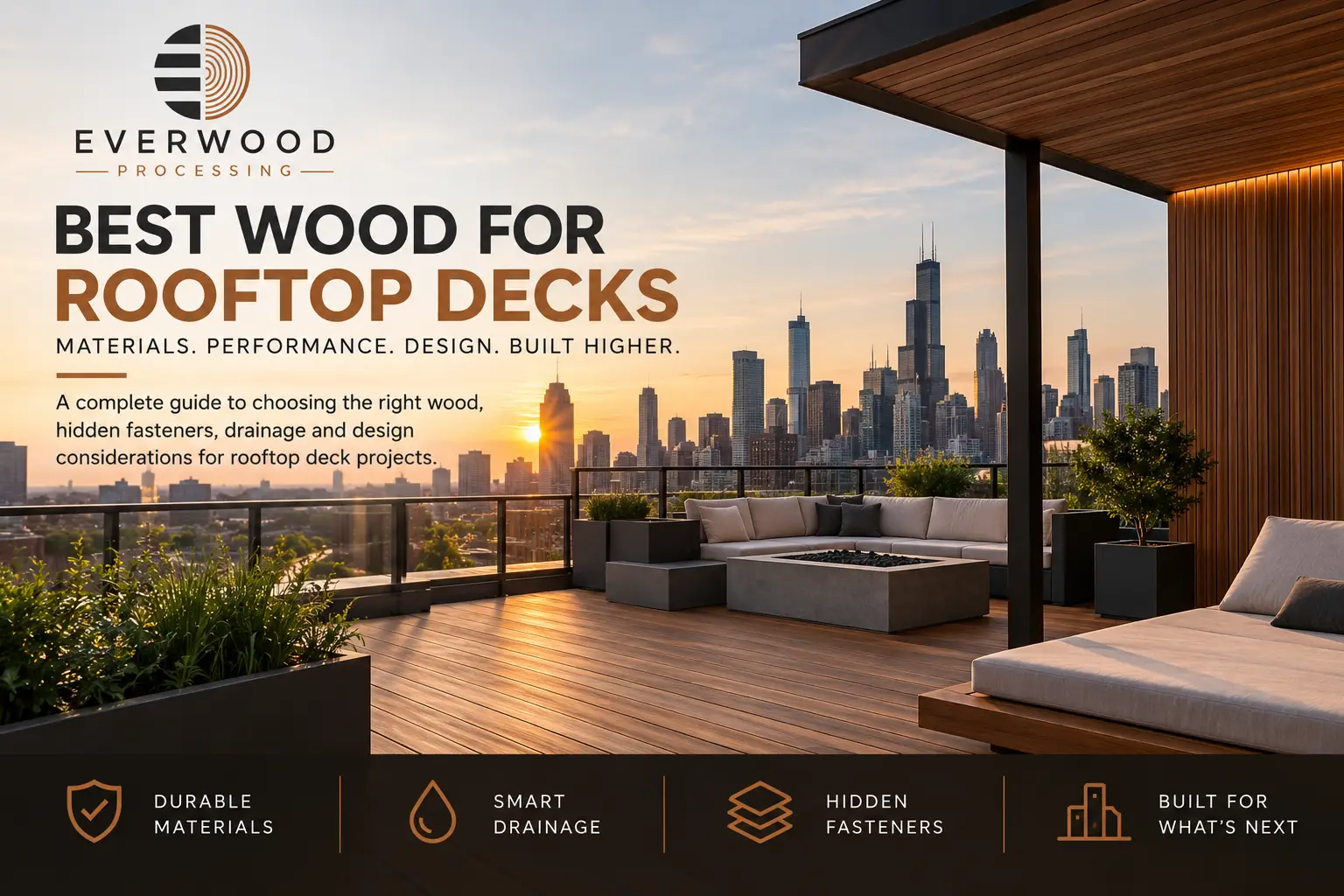
A rooftop deck asks more from its materials than a typical backyard deck. The surface is exposed to intense sun, wind, rain, freeze-thaw cycles and temperature swings, while the assembly often sits above waterproofing, drains and building systems that may need future access. That combination makes material stability, ventilation, fastening and serviceability just as important as appearance.
For architects, developers, builders and homeowners, the best rooftop decking is therefore not simply the “hardest” wood. It is the material and installation system that work together for the specific roof. Everwood Processing supports premium decking and patio projects with precision milling, GRAD-compatible preparation, factory finishing and processing of multiple modified and architectural wood species.
What Is the Best Wood for a Rooftop Deck?
Modified wood is often a strong starting point because rooftop applications reward dimensional stability and durability. Kebony®, Accoya® and thermally modified woods such as Thermory® are commonly considered for premium exterior projects. Cedar and selected hardwoods can also be excellent choices when their characteristics, maintenance expectations and fastening requirements align with the design.
Kebony: Premium Real-Wood Character for High-Design Roof Decks
Kebony is a modified wood valued for stability, durability and a natural appearance that can weather gracefully. It works particularly well when a project calls for real wood rather than a synthetic surface. Its visual warmth makes it attractive for hospitality terraces, multifamily amenity spaces and luxury residential rooftops where the deck is part of the architecture, not merely a walking surface.
Accoya: Dimensional Stability for Demanding Exterior Conditions
Accoya is acetylated wood known for exceptional dimensional stability and durability. Those characteristics are useful on exposed rooftops where repeated wetting and drying cycles can punish conventional lumber. Accoya has been used in rooftop applications, including projects where long boards and precise detailing are part of the design. Its light color can be left to weather or finished depending on the desired appearance.
A documented Accoya rooftop decking project illustrates how dimensional stability can support long, continuous-looking deck surfaces. As with any proprietary material, project teams should follow the manufacturer’s current installation and fastening requirements.
Thermory and Thermally Modified Wood: Stable, Lightweight and Architectural
Thermally modified wood uses heat and steam to change the wood’s properties without conventional chemical preservatives. Products such as Thermory are popular for rooftop terraces because they combine natural wood character with improved dimensional stability. Their warm tone works well in modern architecture and can transition into pergolas, screens or cladding for a coordinated exterior palette.
Thermory’s rooftop decking design guidance emphasizes rooftop-specific considerations including exposure, structural load, weather and material performance. Those issues should be addressed early rather than after decking has already been selected.
What About Cedar and Premium Hardwoods?
Cedar remains attractive because it is lightweight, workable and naturally beautiful. Premium hardwoods can offer density and durability with distinctive grain. Neither category should be selected by appearance alone. Rooftop projects need careful evaluation of movement, board dimensions, fastening, maintenance, local climate and the roof assembly below. A beautiful species paired with the wrong detail can become an expensive maintenance problem.
Drainage Is Part of the Decking System
A rooftop deck must allow water to reach the roof drainage system. Deck boards, rails, sleepers or pedestals should not create unintended dams or make drains impossible to inspect. The roof membrane remains the water-control layer; the deck surface above it should be designed as a removable or serviceable finish assembly where practical.
That is one reason elevated rail and pedestal systems are attractive for many commercial and multifamily rooftops. They can create a level finished surface over a sloped roof while preserving space below for drainage. The exact assembly must be engineered for loads, wind, roof conditions and manufacturer requirements.
Future Access Can Be More Valuable Than It Looks on Day One
Rooftop drains clog. Lighting changes. Waterproofing eventually needs inspection. Mechanical and electrical components may require service. If every board is permanently face-fastened in a way that makes removal destructive, routine building maintenance becomes harder than it needs to be.
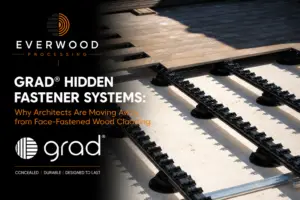
A GRAD rail-and-clip system can provide a clean hidden-fastener surface while supporting board removability in appropriate assemblies. That combination is particularly useful for rooftops, where access below the deck can have real operational value over the life of the building.
Hidden Fasteners Keep Premium Rooftop Decking Looking Premium
Rooftop amenity decks are often viewed from adjacent offices, residences, restaurants and upper floors. Rows of exposed screw heads can undermine an otherwise high-end material selection. Precision-milled hidden fastening keeps the visible surface focused on the wood while also helping establish consistent board spacing and alignment.
Factory Finishing Can Reduce Rooftop Jobsite Work
Finishing hundreds of boards on a roof adds staging, weather and quality-control challenges. EWP’s wire brushing and factory finishing services can prepare approved materials before they reach the project, helping reduce field labor and create a more consistent appearance. Sample development is especially valuable when the owner wants a specific initial tone or texture.
Rooftop Deck Design: Start With the Whole Assembly
Wood performance is closely tied to moisture. The USDA Forest Products Laboratory Wood Handbook explains how moisture content affects dimensional change and wood performance. On a roof, that makes ventilation, drainage, spacing and detailing fundamental design issues rather than optional extras.
Before specifying material, confirm structural capacity, wind-uplift requirements, waterproofing protection, drainage, pedestal or sleeper layout, guard attachment, fire and code requirements, board profile, fastening and maintenance access. Commercial rooftops should be coordinated with the architect, structural engineer, roofing consultant and system manufacturers.
Why Everwood Processing for Rooftop Decking?
Everwood Processing brings several pieces of the rooftop decking package together in one Midwest production operation. EWP can evaluate approved materials, precision mill boards for hidden fastening, develop surface textures and apply factory finishes. Dealers and lumber yards can also work with EWP as a processing partner rather than adding specialty machining at the jobsite.
For project teams, that means fewer handoffs and more of the critical preparation completed before installation begins. For owners, it means a rooftop deck designed around appearance, constructability and future serviceability rather than material selection alone.
Frequently Asked Questions
What is the best wood for a rooftop deck?
Modified woods such as Kebony, Accoya and thermally modified wood are strong candidates because stability and exterior durability matter on exposed rooftops. Cedar and selected hardwoods can also work when properly detailed.
Can wood decking be installed over a waterproof roof?
Yes, but the deck assembly must protect the membrane, preserve drainage and meet structural, wind and roofing requirements. Pedestal or sleeper systems are commonly evaluated for this purpose.
Why are removable deck boards useful on rooftops?
They can simplify access to drains, waterproofing and utilities below the finished surface, reducing disruption during inspection or maintenance.
Should rooftop decking use hidden fasteners?
Hidden fastening is especially attractive on premium rooftops because it eliminates visible face screws and can improve spacing consistency. Compatibility and engineering requirements still govern.
Can EWP process owner- or dealer-supplied wood?
EWP can work with supplied or sourced materials, subject to project requirements and compatibility review.
For a rooftop terrace, amenity deck or specialty exterior project, contact Everwood Processing early to coordinate material, milling, finishing and installation requirements.