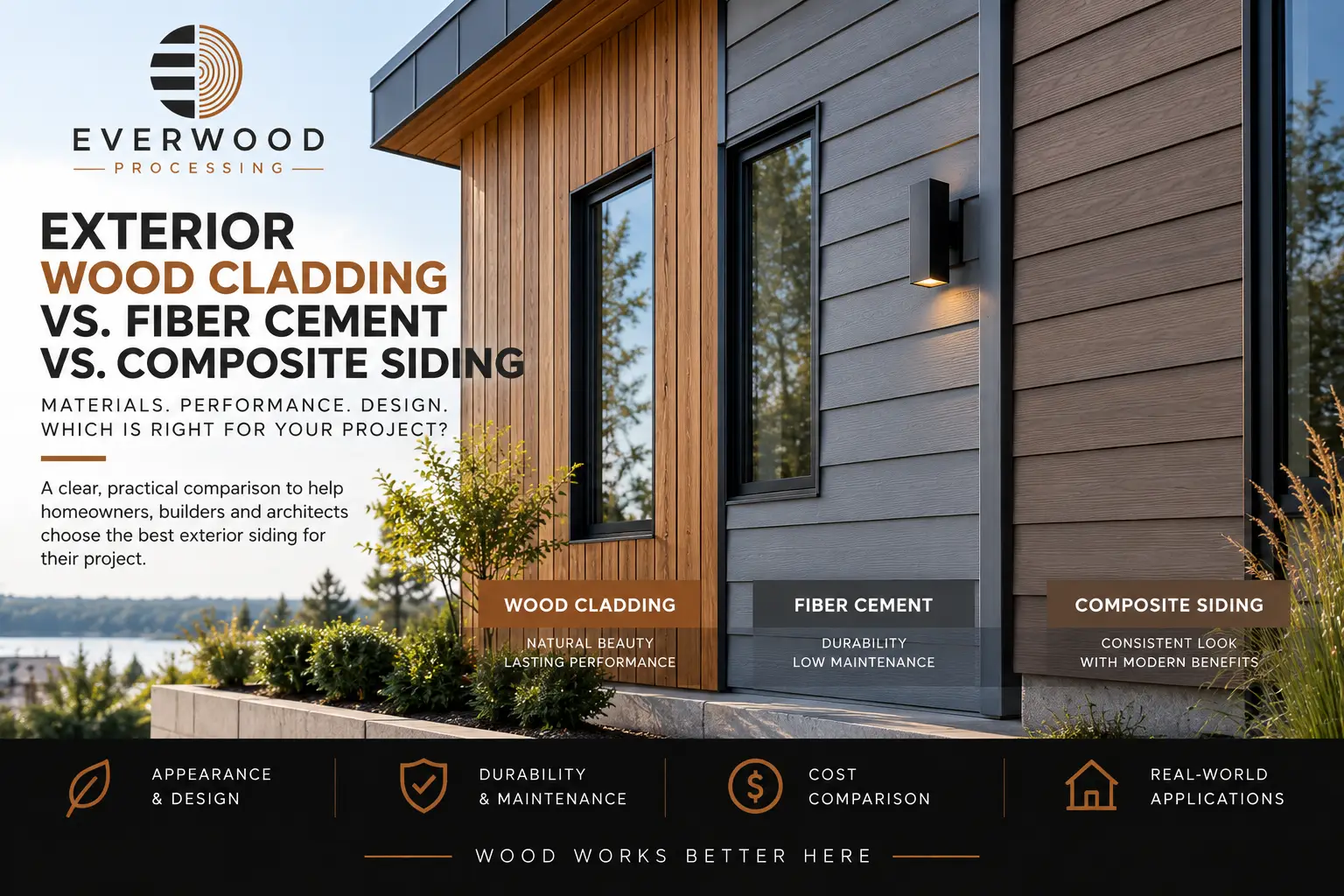
Choosing exterior cladding is not simply a durability contest. The façade has to satisfy architecture, moisture management, maintenance expectations, budget, code requirements and the owner’s tolerance for how materials age. Real wood, fiber cement and composite siding can all perform well, but they create very different buildings and demand different decisions from the project team.
Everwood Processing specializes in architectural wood cladding and siding rather than fiber cement or synthetic siding. That gives us a clear point of view—but not a reason to pretend wood is right for every project. The best specification is the material that honestly matches the design and performance priorities.
Wood Cladding vs. Fiber Cement vs. Composite: The Quick Comparison
Choose premium wood when authentic grain, warmth, custom profiles and natural material character are central to the architecture. Choose fiber cement when noncombustible or low-combustibility strategies, standardized painted appearances and broad installer familiarity are priorities. Choose composite siding when the project wants a manufactured product with specific moisture, maintenance or dimensional-performance characteristics. Always verify current code, fire, warranty and manufacturer requirements for the exact product.
Why Architects Still Choose Real Wood Cladding
Real wood has something manufactured siding works hard to imitate: genuine variation. Grain, tone and texture change from board to board, giving a façade depth that is difficult to reproduce with printed or embossed surfaces. Modified woods have expanded the design possibilities by improving stability and durability while preserving that natural character.
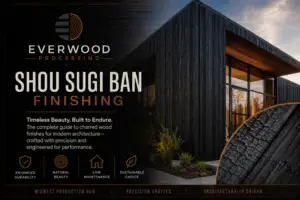
Kebony®, Accoya®, Thermory®, Arbor Wood, cedar, Dasso® Bamboo and selected hardwoods each create a different architectural expression. Wood can be installed horizontally, vertically or in custom layouts, and it can be wire brushed, factory finished or charred to create finishes ranging from refined and contemporary to heavily textured.
EWP’s architectural applications include cladding, rainscreens, soffits, ceilings, walls and decking, allowing designers to carry the same material language across multiple surfaces.
Where Fiber Cement Is Strong
Fiber cement is a manufactured cladding typically composed of cementitious material reinforced with fibers. It is widely used because it can deliver a consistent painted appearance, is dimensionally different from natural wood, and is available in standardized lap, panel and trim formats. It is also commonly considered where fire performance is a major design criterion, subject to the tested product and local code requirements.
The tradeoff is authenticity. Fiber cement can mimic lap siding or wood grain, but it is not wood. For projects where the façade is meant to feel materially rich up close—luxury homes, hospitality, cultural buildings, high-end multifamily and commercial entries—that distinction can matter.
What Does “Composite Siding” Actually Mean?
Composite siding is a broad label, not one material. Some products are engineered wood made from wood strands or fibers with binders and treatments. Others use mineral, polymer or ash-based formulations. Their weight, expansion behavior, fastening, moisture tolerance and fire characteristics can differ substantially. Never write “composite siding” into a specification without identifying the actual product and reviewing its technical data.
Appearance: Real Wood Has the Natural Advantage
If the design intent calls for genuine wood, real wood wins the aesthetic comparison because it is the reference that other products imitate. Premium modified wood also gives architects options for natural weathering, penetrating oil finishes, dark factory colors, wire-brushed texture and charred surfaces. Fiber cement and composites can offer excellent consistency, which may be preferable when uniformity is the goal.
Durability Depends on the Material and the Wall Assembly
No cladding should be evaluated in isolation from water management. Building Science Corporation rainscreen guidance describes how drainage and ventilation cavities help incidental moisture drain and improve drying behind cladding. That principle applies whether the visible material is wood, fiber cement or another siding product.
With wood, species selection and moisture detailing are particularly important. Modified woods are often specified to reduce movement and improve exterior durability. The correct fasteners, clearances, end treatment, ventilation and finish system should follow the material manufacturer’s requirements and the project’s building-envelope design.
Maintenance: Decide What “Low Maintenance” Means
A painted fiber-cement façade may eventually need repainting. Composite products have their own cleaning and repair requirements. Natural wood can be maintained to preserve a particular color or allowed to weather toward a silver-gray patina, depending on the species and finish. None of these options is literally maintenance-free.
Factory preparation can make wood maintenance more predictable. EWP offers wire brushing and factory finishing so approved boards can arrive with controlled texture and finish rather than relying entirely on field application.
Installation and Repairability
Fiber cement can be heavy and produces silica-containing dust when cut, so installers must follow manufacturer safety procedures. Composite installation varies by product. Wood is familiar to most carpenters, but premium architectural wood demands accurate layout, proper ventilation and careful fastening if the finished façade is expected to look exceptional.
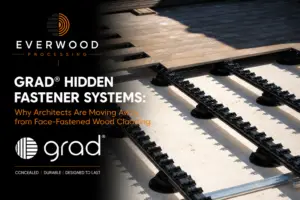
For projects seeking a fastener-free appearance, GRAD hidden-fastener processing can prepare compatible wood boards for rail-and-clip installation. Concealed fastening supports clean reveals and, in appropriate assemblies, can make individual board access easier than permanently face-fastened cladding.
Sustainability and Material Story
Sustainability cannot be reduced to a single label. Forestry practices, raw materials, manufacturing energy, transportation, service life, maintenance and end-of-life all matter. Responsibly sourced wood is renewable and stores biogenic carbon during its service life, while manufactured claddings may offer long service lives and other project-specific environmental advantages. Teams pursuing certifications should use verified product-specific environmental data rather than broad assumptions.
The USDA Forest Products Laboratory Wood Handbook provides technical background on wood properties, moisture, durability, finishing and use in buildings, making it a useful reference when evaluating exterior wood as an engineering and architectural material.
Which Exterior Siding Is Best for Homes?
For a homeowner who wants authentic natural character and is comfortable choosing a maintenance strategy, premium wood can create a façade that synthetic products cannot duplicate. Fiber cement may make more sense for owners prioritizing a painted, standardized appearance and particular fire or maintenance objectives. Composite siding can be attractive when a specific product’s performance characteristics align with the climate and design.
Which Cladding Is Best for Commercial Projects?
Commercial specifications are more application-specific. Architects should evaluate code compliance, fire performance, façade height, attachment, wind loads, rainscreen design, replacement strategy, warranties and maintenance access. Wood is particularly compelling on hospitality, office, multifamily, institutional and mixed-use projects where the façade needs warmth and premium visual identity.
Why EWP Changes the Equation for Architectural Wood
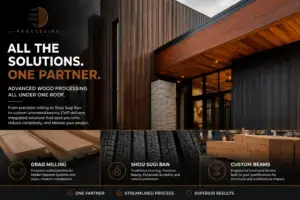
One historical objection to wood is the amount of jobsite coordination required to mill, texture and finish it consistently. Everwood Processing moves much of that work into controlled production. EWP can combine precision profiles, GRAD milling, wire brushing, factory finishing and Shou Sugi Ban processing while working with multiple premium materials.
For lumber yards and dealers, that creates a way to offer higher-value architectural wood without building every specialty capability in-house. For architects and builders, it reduces handoffs and helps material arrive closer to installation-ready condition.
Frequently Asked Questions
Is wood cladding better than fiber cement?
Neither is universally better. Wood is strongest when authentic natural appearance and custom architectural detailing are priorities; fiber cement may be preferred for standardized painted façades or specific fire-performance objectives.
Is composite siding the same as engineered wood?
Not always. “Composite” can describe engineered wood, polymer-mineral products and other formulations. Always identify the exact product before comparing performance.
Does exterior wood cladding require a rainscreen?
Requirements vary by assembly and code, but drained and ventilated cavities are widely used because they support moisture management and drying behind cladding.
Can wood cladding be installed without visible screws?
Yes. Compatible boards can be precision milled for hidden-fastener systems such as GRAD, subject to system and material requirements.
What premium wood species does EWP process?
EWP works with materials including Kebony, Accoya, Thermory, Arbor Wood, Dasso Bamboo, cedar, hardwoods and other approved project-specific materials.
Comparing façade options for a current project? Contact Everwood Processing to discuss wood species, profiles, hidden fastening, factory finishing and sample development before the specification is finalized.