Kebony, Accoya, Lunawood and Thermory are often grouped together as “modified wood,” but they are not the same product and they are not created by the same process. For architects, builders and lumber dealers, that distinction matters because material selection affects appearance, dimensional behavior, profiling, finishing, fastening and the applications for which a product is intended.
Everwood Processing works with premium and modified wood products across cladding, decking, walls, ceilings, soffits and specialty fabrication. Rather than declaring one brand the winner, this guide focuses on the more useful question: which material best fits the project in front of you?
What Is Modified Wood?
Modified wood starts as real wood and is altered to improve selected performance characteristics. The process may change how readily the cell structure interacts with moisture, improve dimensional stability or increase biological durability. The method varies by manufacturer.
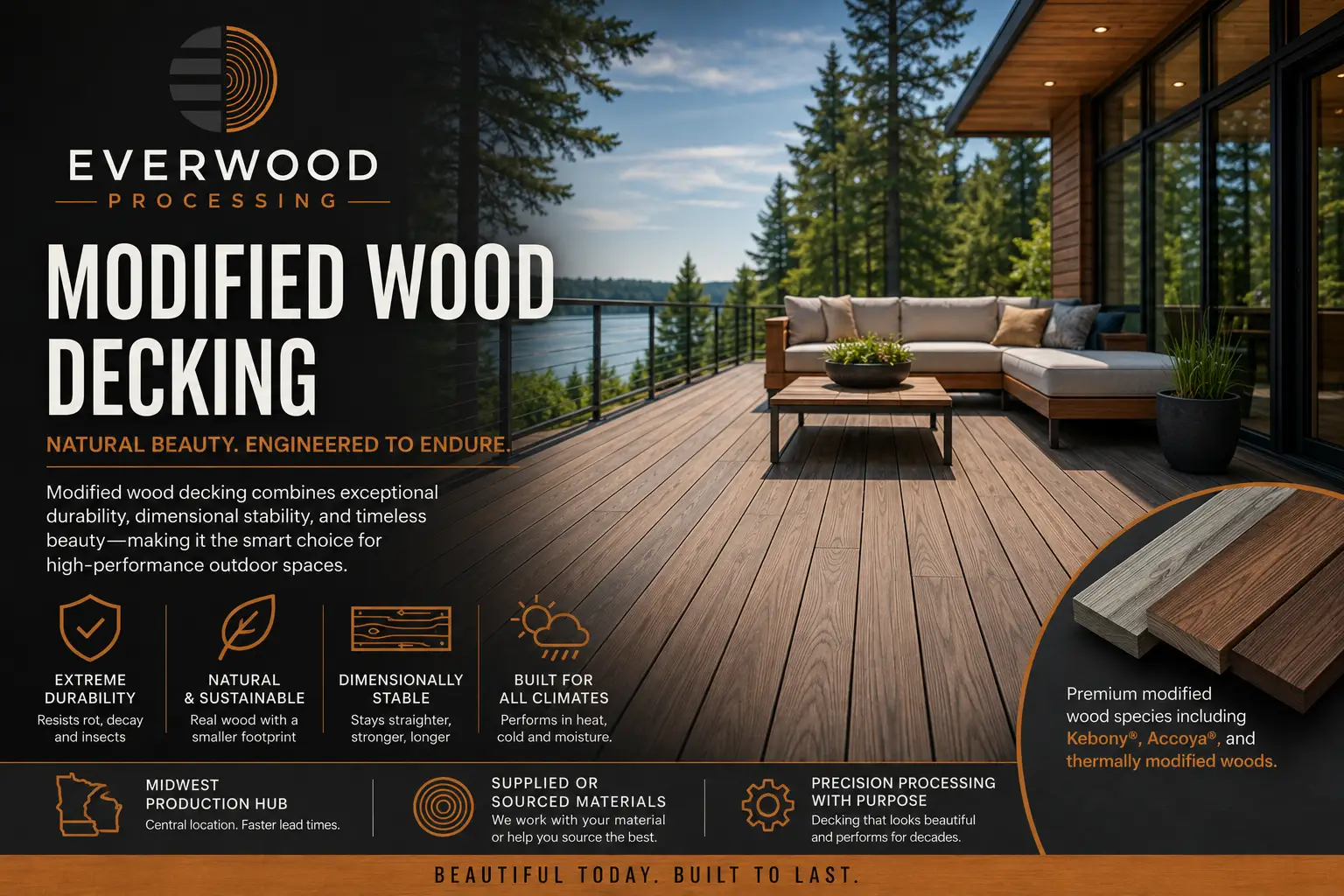
Kebony uses furfurylation. Accoya uses acetylation. Lunawood and Thermory manufacture thermally modified wood using controlled heat processes. Those technologies create different material characteristics, and the manufacturer’s current technical documentation should remain the controlling reference for specification.
Kebony: Dense Modified Wood with a Distinctive Natural Look
Kebony is known for a rich brown appearance that can weather toward a silver-gray patina when left exposed. Its modification process increases density and changes the wood permanently. That makes it appealing for architects who want real wood character with a substantial feel.
EWP can process Kebony for applications such as decking and cladding, including compatible precision milling where project requirements allow. Wire brushing and finishing can further change its visual character. The key is deciding whether the design wants to preserve the original brown tone, encourage natural weathering or introduce a controlled finish.
Accoya: Dimensional Stability and a Flexible Finish Palette
Accoya is acetylated radiata pine. Its strongest design advantage is often dimensional stability, which can be valuable in cladding, trim and other exterior details where movement affects joints and coatings.
Its lighter starting color also provides a different canvas for factory finishing than darker modified materials. Architects considering opaque or semi-transparent colors, wire brushing or specialty surface treatments can use samples to determine how the final finish will read.
Accoya publishes extensive technical information and warranty requirements, so specification should always follow the current product documents for the intended use.
Lunawood: ThermoWood for Contemporary Architecture
Lunawood manufactures ThermoWood using heat and steam. The process creates the warm brown color associated with thermally modified wood and is used in products for façades, interiors and landscaping applications.
For architects, Lunawood can be particularly interesting when the project calls for a consistent contemporary wood aesthetic across cladding, soffits or interior surfaces. Wire brushing can emphasize grain and texture, while factory-applied finishes can help establish a desired color strategy.
Because thermal modification changes the wood itself, designers should use the manufacturer’s published span, fastening and application guidance rather than treating the material like ordinary untreated lumber.
Thermory: Thermally Modified Wood with Multiple Species and Profiles
Thermory also specializes in thermally modified wood and offers products for decking, cladding, saunas and interiors. Species, thermal treatment and product configuration vary by collection.
That variety gives designers choices, but it also makes product-specific specification important. “Thermally modified wood” is a category, not a complete specification. Species, grade, profile, dimensions, finish and installation method still need to be identified.
Which Modified Wood Is Best for Exterior Cladding?
The best exterior cladding material depends on exposure, façade design, desired weathering and maintenance expectations. Accoya may rise to the top when dimensional stability and coating performance are major priorities. Kebony can be compelling when density and a rich natural surface are desired. Lunawood and Thermory provide thermally modified options with distinctive colors and architectural profiles.
Material selection also has to work with the wall assembly. EWP’s cladding and siding processing can include custom profiling, GRAD-compatible milling, wire brushing, Shou Sugi Ban and factory-applied finishes where appropriate.
How Finishing Changes the Decision
Finishing is not an afterthought. A material that looks ideal unfinished may respond differently once wire brushed, oiled or charred. Surface texture changes how light hits the grain. Pigmented finishes change the weathering strategy. Factory application can improve consistency and reduce work on the jobsite.
Through wire brushing and factory finishing, EWP can develop samples that combine material and finish before the project team commits to production.
This matters on commercial projects where hundreds or thousands of boards need to read as one coordinated architectural surface.
Profiling and Hidden Fastening Matter Too
A beautiful board still has to install correctly. Custom profiles can create rainscreen details, tongue-and-groove assemblies, slatted walls, ceiling systems and project-specific transitions. Hidden fastening can remove face screws from the visual field.
EWP is an approved GRAD milling and manufacturing partner and can precision-mill compatible boards for GRAD hidden-fastener systems. Compatibility must be confirmed for the specific material, dimensions and application.
What Should Lumber Dealers and Builders Ask Before Ordering?
Start with application rather than brand. Is the material going on a deck, façade, soffit, ceiling or interior wall? Is it exposed to full weather? Does the owner want the wood to gray naturally or maintain a specific color? Is hidden fastening part of the design? Does the board require a custom profile? Will finishing happen in the factory or field?
Answering those questions early helps avoid ordering a premium material only to discover later that the desired profile, fastening system or finish requires a different configuration.
Frequently Asked Questions About Kebony, Accoya, Lunawood and Thermory
Are all four products thermally modified wood?
No. Lunawood and Thermory use thermal modification. Kebony uses furfurylation, while Accoya uses acetylation.
Which modified wood is best?
There is no universal winner. Application, exposure, appearance, finishing, structural requirements, availability and budget determine the best fit.
Can modified wood be factory finished?
Many modified wood products can be finished, but coating compatibility and preparation should follow the finish and wood manufacturer’s current guidance.
Can these woods be wire brushed?
Yes, suitable products can be wire brushed to emphasize grain. The visual result varies by species and modification process, which is why samples are valuable.
Can modified wood be used with hidden fasteners?
Depending on product, dimensions and application, modified wood may be compatible with hidden-fastener systems. EWP can evaluate GRAD milling requirements for approved materials.
Should architects specify the manufacturer or just “modified wood”?
For most projects, the specification should identify the actual product or clearly defined performance criteria because modification technologies and product properties differ.
Choose the Material as Part of the Complete Assembly
The best results come from treating wood selection, profile, finish and fastening as one decision. Everwood Processing helps architects, builders, manufacturers and lumber dealers coordinate those steps through a single Midwest production partner with nationwide support.
Order material and finish samples to compare modified wood options before final specification.